Why That Alphonso Mango Just Cost You $12: The Hidden Economics Behind Desi Imports
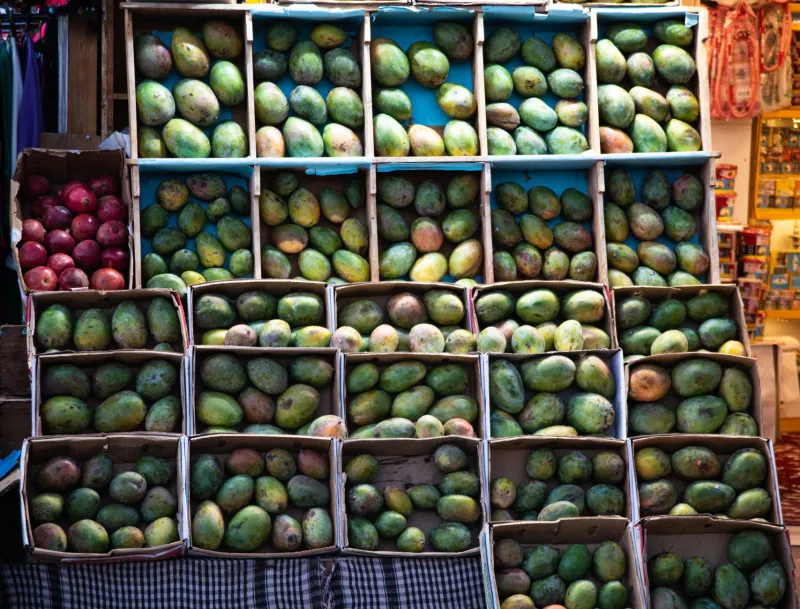
There's a particular kind of sticker shock that hits different when you're Desi. You're standing in a South Asian grocery store in New Jersey, holding a small cardboard box of Alphonso mangoes, and the price tag says $58. You do the mental currency conversion — a habit that never really goes away — and the number on the other end makes your eye twitch. You could buy a whole crate back in Ratnagiri for that.
But here you are, and here the mangoes are, and you're probably going to buy them anyway. Because you know the difference, and no amount of Tommy Atkins from the Kroger produce aisle is going to scratch that particular itch.
So what actually explains the price gap? It's not just greed. It's not just markup. It's a long, expensive, surprisingly complicated journey that starts on a farm in Maharashtra and ends in your fruit bowl in the suburbs of Chicago — and every single step of that journey costs money.
The Tariff Wall Nobody Talks About
Let's start with the obvious one: the U.S. government charges import duties on a wide range of agricultural products, and fresh fruit is no exception. Depending on the country of origin and the specific product category, importers can face tariffs ranging from a few percentage points to significant levies that immediately inflate the base cost before the product even clears customs.
Beyond tariffs, there are inspection fees, fumigation requirements, and USDA phytosanitary certifications to contend with. The U.S. is understandably strict about what agricultural products cross its borders — nobody wants a foreign pest hitchhiking on a shipment of guavas — but those compliance costs get baked into every box that makes it through. The importer absorbs them, and then passes them along. So do the distributor, the regional wholesaler, and the store owner. By the time a product reaches the shelf, it has been marked up at every single handoff.
Cold Chain Math Is Brutal
Fresh produce is unforgiving. A mango that isn't kept at precisely the right temperature for the duration of a 20-hour flight followed by a cross-country truck ride is a mango that arrives bruised, overripe, or rotting. Importers know this, which is why they invest heavily in refrigerated containers, temperature-monitored warehousing, and expedited freight options that cost significantly more than standard cargo.
And even with all of that, spoilage happens. Industry insiders who work with South Asian specialty produce will tell you that spoilage rates on premium fresh fruit imports can run anywhere from 10 to 30 percent depending on the season, the supplier, and how smoothly customs clearance goes. That loss doesn't disappear — it gets distributed across the units that do sell. When a third of your shipment doesn't make it to the shelf in sellable condition, the boxes that do need to carry the full cost of the ones that didn't.
This is a piece of the pricing puzzle that most shoppers don't think about. You're not just paying for your mango. You're partially subsidizing the ones that didn't survive the trip.
Currency Swings and Supplier Volatility
Add currency fluctuation into the mix and things get even messier. Importers typically negotiate contracts with overseas suppliers in local currency — Indian rupees, Pakistani rupees, Bangladeshi taka — and then pay for freight and domestic distribution in U.S. dollars. When the dollar strengthens, that can provide some relief. But when it weakens, or when the source currency experiences volatility of its own, the cost structure shifts in ways that are difficult to predict and even harder to hedge against for smaller operators.
Small Desi importers and grocery owners — the kind running a single storefront in a strip mall in Fremont or a family-operated warehouse in Queens — don't have the financial infrastructure to manage currency risk the way a large commodity importer might. They're often absorbing those swings in real time, adjusting prices season to season or sometimes week to week.
What Savvy Sellers Are Doing Differently
Not everyone is just accepting these economics as fixed. A growing number of Desi entrepreneurs are looking for ways to compress the supply chain and cut out the layers of intermediaries that inflate costs.
Some sellers have started building direct relationships with farms and cooperatives in South Asia, placing larger consolidated orders that improve their negotiating position on freight and reduce the per-unit cost of compliance and logistics. Others have shifted toward co-importing models — essentially pooling orders with other small retailers so they can fill a full container rather than paying premium rates for partial loads.
There's also been real movement toward shelf-stable and value-added products as an alternative to fresh imports. Mango pulp in cans, freeze-dried jackfruit, vacuum-sealed dried fenugreek — these products travel better, last longer, and sidestep the brutal cold chain math that makes fresh imports so expensive. For many Desi households, they've become a practical bridge between the flavors they grew up with and the logistics realities of life in America.
Could Farm-Direct Ever Really Work?
The dream, of course, is a model where a family in Lucknow ships pickles directly to a customer in Atlanta — no middlemen, no inflated markups, just producer to consumer. And in theory, the internet has made that more possible than ever. Platforms built around connecting Desi buyers and sellers are actively trying to facilitate exactly this kind of direct commerce.
The honest answer, though, is that the regulatory and logistical hurdles are genuinely steep. FDA food import requirements, labeling compliance, customs brokerage fees, and the sheer complexity of international last-mile delivery make pure farm-to-door imports difficult for anything perishable. For packaged goods with longer shelf lives, the model has more legs — and you're already seeing it work for things like artisanal pickles, specialty spice blends, and handcrafted sweets that can survive the journey in sealed packaging.
Fresh produce is the harder nut to crack. Until there's a meaningful shift in how import compliance costs are structured for small-volume specialty shipments — or until cold chain logistics get dramatically cheaper — the premium is likely here to stay.
The Price You Pay for Taste Memory
Here's the thing, though. Desi shoppers aren't paying $58 for a box of mangoes because they don't understand economics. They're paying it because they do understand something else: that certain flavors are irreplaceable, that food is identity, and that some things are worth the premium precisely because they can't be substituted.
The Alphonso mango isn't competing with the Tommy Atkins at Kroger. It's competing with the memory of eating the same fruit on a rooftop in May with your cousins. That's a market with essentially inelastic demand, and everyone in the supply chain knows it.
What's worth pushing for, and what platforms like Apna Market are genuinely working toward, is a version of this economy that's a little more fair — where more of the premium stays with the producer, where small importers can compete on something closer to a level playing field, and where Desi shoppers don't have to choose between their budget and their culture every time they want a taste of home.
The mango will probably still cost $12. But it doesn't have to cost $20.