Something Borrowed, Something Complicated: How Desi Americans Are Renegotiating the Marriage Exchange
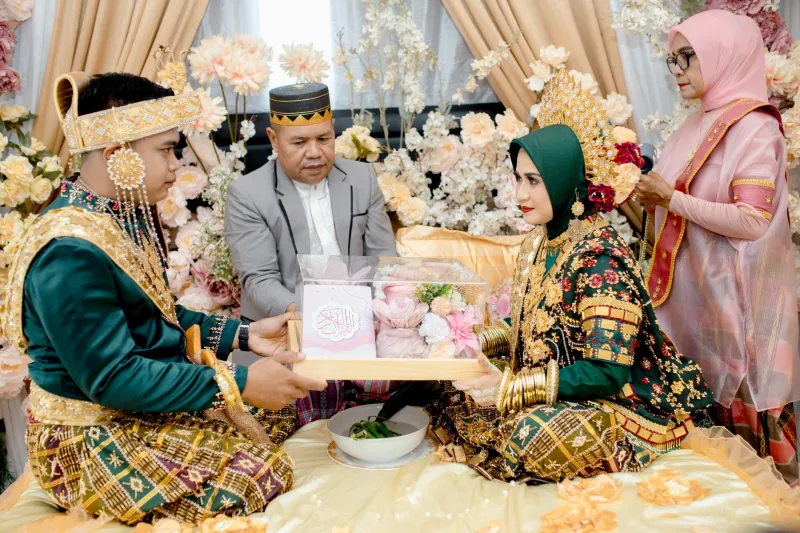
Let's be honest — no one in the group chat is calling it dowry. They're calling it "gifts from the bride's side" or "just what our family does" or, sometimes, just not talking about it at all. But the conversation is happening. In living rooms in New Jersey, over chai in Fremont, at kitchen tables in Houston. Second and third-generation Desi Americans are quietly — sometimes loudly — wrestling with one of the most loaded traditions their families brought over from South Asia.
And it's more complicated than a simple yes or no.
What We're Actually Talking About
Dowry, in its traditional form, is the transfer of property, money, or goods from the bride's family to the groom's family at the time of marriage. It's been practiced across South Asian communities for centuries, and it's also been widely condemned — legally banned in India since 1961, associated with serious harm and abuse, and called out by activists and lawmakers alike.
But here's the thing: the practice didn't vanish when families immigrated. It traveled in carry-on luggage, tucked between expectations and love. In America, it's morphed into something harder to name. It might look like a fully furnished apartment gifted to a newly married couple. Or gold jewelry given quietly, outside the ceremony. Or an elaborate trousseau of kitchen goods, linens, and appliances that the bride's parents spend months assembling.
Nobody fills out a customs form for tradition.
The Second-Gen Squeeze
For American-raised Desis, this is where things get thorny. Many grew up hearing — from their parents, their communities, their Bollywood-adjacent cultural education — that certain things are just "what you do." At the same time, they went to schools where they learned about gender equity, financial independence, and consent. They read articles. They talked to friends outside their community. They formed opinions.
And then they got engaged.
"My mom started making a list of what we'd give his family before we even had a date set," says one 28-year-old woman from the Chicago suburbs who asked not to be named. "I didn't even know how to start that conversation. It wasn't that she was being coerced — she genuinely wanted to do it. But I wasn't sure I did."
This is the tension a lot of young Desi Americans are sitting in. It's not always a story of a controlling family demanding goods. Sometimes it's a mother who equates giving with love. Sometimes it's a father who feels shame if he doesn't send his daughter off "properly." Sometimes it's the couple themselves who can't agree on where the line is between honoring culture and perpetuating harm.
When the Registry Becomes a Negotiation Tool
Here's something interesting happening in online spaces: wedding registries and curated product catalogs are quietly becoming a way for families to navigate these conversations with a little more structure — and a little less confrontation.
Platforms like Apna Market, where you can find everything from handcrafted brass pooja sets to premium Indian cookware to embroidered bedding, are seeing South Asian couples and their families use wedding-adjacent shopping as a kind of soft negotiation. What goes on the registry? Who buys what? Who gifts what privately?
It sounds transactional, but it can actually be a gentler entry point into a hard conversation. "We made a shared list," one groom from the Bay Area explained. "Both sides contributed to it. Nobody had to feel like they were giving more or less. It was just... stuff we needed, and people who loved us bought it."
That framing — shared, mutual, need-based — is a meaningful departure from the directional, obligatory exchange that traditional dowry represents. It's not a perfect solution. But for families navigating this in real time, it's something.
The Generational Fault Line
What makes this particularly charged is that the people most likely to push back on these practices are also the ones most invested in maintaining family relationships. Desi Americans, by and large, are deeply connected to their families. Rejecting a tradition outright can feel like rejecting the people who hold it.
"I didn't want to make my mom feel like she was doing something wrong," says a 31-year-old from Atlanta whose parents immigrated from Pakistan. "She was doing what her mother did. It came from a place of wanting to take care of me. But I also knew that if I just went along with it without saying anything, I was part of the problem."
So she talked to her fiancé first. Then they talked to both sets of parents together. It was uncomfortable. There were tears. There were a few days of silence. And eventually, they landed somewhere that felt workable — a celebration that honored the spirit of giving without reinforcing the power imbalance.
Not everyone gets that resolution. Some couples navigate this alone, without the vocabulary or the family support to push back. Some communities still carry significant social pressure. And in some households, the conversation never happens at all.
Moving Forward Without Leaving Everyone Behind
What's striking about how this generation is handling it is the refusal to go fully in either direction. They're not throwing out tradition wholesale. They're also not accepting harm in the name of culture. They're doing what second-gen communities have always done: picking through the inheritance, keeping what feels like theirs, and quietly setting down what doesn't.
Online marketplaces that cater to South Asian communities are part of this ecosystem in ways that might not be immediately obvious. When a couple builds a registry full of hand-selected items that reflect their actual life — their kitchen, their aesthetic, their values — they're telling a story about who they are as a unit. That's new. That's theirs.
Apna Market exists in this space, not as a referee for cultural debates, but as a place where community members can find the things that matter to them — whether that's a set of copper serving bowls for a walima dinner or a sleek air fryer for a couple who's never going to make halwa from scratch. The marketplace doesn't dictate what the tradition looks like. The people do.
And increasingly, the people are deciding for themselves.
The Conversation Isn't Over
If you're in the middle of planning a South Asian wedding in America right now, you probably already know none of this is settled. The expectations are still there. The family opinions are still loud. The cultural weight is real.
But so is the agency of this generation. And the fact that these conversations are happening — in group chats, over chai, in therapy, in quiet negotiations over wedding registries — means something is shifting. Slowly, messily, imperfectly. But shifting.
That's usually how it goes with the things worth changing.