Dal Without the Dairy, Curry Without the Compromise: Inside the Vegan Desi Food Dilemma
Here's a scenario that plays out in Desi households across America more often than anyone wants to admit: a second-generation South Asian in her late twenties has gone vegan. Her mother, visiting from Houston for the weekend, has made kheer. There is a long silence. Then there is negotiation. Then there is probably kheer.
Food in South Asian culture isn't just sustenance — it's love, identity, and argument, often simultaneously. Which makes the growing vegan movement within the diaspora not just a dietary shift but a genuinely complicated cultural negotiation. And for Desi food entrepreneurs trying to build businesses around it, the complexity doesn't get any simpler.
The Setup: Two Values, One Kitchen
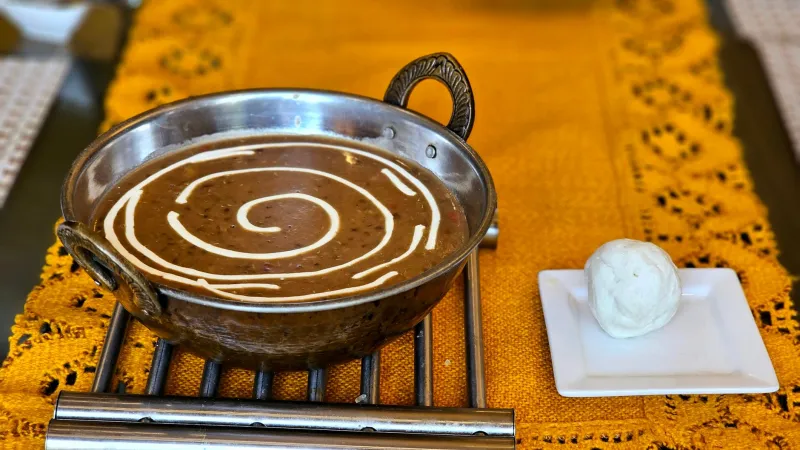
South Asian cuisine is, in many ways, already well-positioned for plant-based eating. Enormous swaths of traditional cooking are built around lentils, vegetables, legumes, and grains. Dal, chana masala, aloo gobi, baingan bharta — the canon is full of dishes that happen to be vegan without trying to be.
But "happens to be vegan" and "marketed as vegan" are very different commercial propositions. And the gap between them is where things get interesting.
The tension shows up in ghee, mostly. Ghee is to South Asian cooking what olive oil is to Italian cuisine — not just an ingredient but a philosophy. It's in the tempering, in the rotis, in the mithai. It carries memory. Telling a traditional Desi cook that ghee is off the table isn't just a substitution request; it's a small act of cultural revision.
Younger South Asian Americans navigating veganism know this. Many of them didn't arrive at plant-based eating carelessly. They've thought about it, argued with their families about it, and worked out their own positions on what counts as authentic and what doesn't. They're not asking the food to pretend the past didn't happen. They're asking it to evolve.
What Sellers Are Actually Dealing With
For Desi food entrepreneurs, the vegan opportunity looks attractive on paper. The plant-based food market in the US has grown significantly over the past decade, and South Asian consumers — particularly younger ones — are part of that shift. Products that can credibly claim both cultural authenticity and ethical alignment should, in theory, sell well.
In practice, it's messier.
The first challenge is ingredient substitution without identity loss. A vegan biryani made with cauliflower instead of meat can be genuinely delicious. A vegan kheer made with oat milk instead of dairy is... fine. But the moment you put it next to the original, the gap becomes apparent, and in a community where food memory runs deep, "fine" isn't always good enough.
Sellers who are navigating this successfully tend to lean into the substitution rather than apologizing for it. Instead of "vegan kheer," some are framing it as "coconut milk kheer" — foregrounding the actual ingredient and its own culinary tradition rather than leading with what's been removed. It's a subtle reframe, but it matters. You're not asking the customer to accept a lesser version; you're offering them a different, equally valid one.
Pricing is the second major hurdle. High-quality vegan alternatives — coconut cream, cashew-based dairy substitutes, ethically sourced plant proteins — cost more than their conventional counterparts. Passing that cost to the consumer works in some markets and fails spectacularly in others. Desi shoppers, broadly speaking, have strong opinions about what food should cost, shaped by decades of comparing prices to what things would cost back home or at the local Indian grocery.
A vegan ghee substitute priced at $18 a jar needs a compelling story to justify itself. Some sellers are telling that story well — emphasizing small-batch production, clean ingredients, dual alignment with Ayurvedic principles and modern ethics. Others are pricing themselves into a corner and wondering why the cart abandonment rate is so high.
The Authenticity Argument (And Why It's Getting Old)
Somewhere in every conversation about vegan Desi food, someone invokes authenticity. Usually as a reason the product can't work.
It's worth pushing back on that a little.
Desi cuisine has never been static. Dishes that feel ancient and essential were often shaped by trade routes, colonial-era ingredient availability, regional migration, and plain old improvisation. The tomato — central to half the curries anyone can name — isn't native to South Asia. Chili peppers arrived from the Americas. The idea that there's a fixed, authentic version of any dish that cannot be touched is more mythology than history.
Younger Desi Americans tend to know this, even if they can't always articulate it. They're not rejecting tradition — they're doing what every generation of cooks has always done, which is adapting it to the conditions of their actual lives.
Sellers who frame their vegan Desi products as part of that ongoing evolution — rather than as replacements for something purer — tend to connect better with this audience.
Who's Actually Buying
The customer for vegan Desi food products isn't a monolith. There's the committed vegan who gave up all animal products years ago and is thrilled to find a chana masala spice blend that doesn't include any hidden dairy. There's the flexitarian who eats mostly plant-based but isn't strict about it. There's the environmentally motivated shopper who wants to reduce their footprint without abandoning the flavors they grew up with. And there's the lactose-intolerant customer who never identified as vegan but desperately wants a mithai box that won't wreck their weekend.
Smart sellers aren't targeting all of them with the same message. The committed vegan wants certification and transparency. The flexitarian wants flavor and convenience. The culturally motivated buyer wants the story and the nostalgia alongside the ethics.
Building product lines that can speak to multiple motivations — without trying to be everything to everyone — is the commercial challenge at the center of this market.
The Longer Game
The vegan Desi food space is still early. The sellers who are building carefully — prioritizing flavor, being honest about substitutions, pricing with intention, and telling genuine stories about why the product exists — are laying groundwork that will matter as this market matures.
The ones chasing the trend without doing that work are going to find themselves holding a lot of unsold oat milk kheer when the algorithm decides the next thing is more interesting.
The food itself, though? When it's done right, it's genuinely good. And that's ultimately what keeps people coming back — not the label, not the values alignment, but the fact that it tastes like something worth eating again.