Three Months, a Suitcase Full of Achaar, and a Whole New Market: The Business of the Visiting Grandparent
The suitcase arrives before the grandparent does, in a sense. Family WhatsApp groups light up weeks before the flight: Dadi is coming, what does she need? Can someone find a rolling walker with a seat? Does she need a US SIM card? What about her blood pressure medication? By the time the cab pulls up to the house in Fremont or Frisco or Fairfax, a dozen small logistics problems have already been quietly solved — or not solved, depending on what was available to buy.
This is the visiting grandparent economy. And it's bigger, more emotionally charged, and more commercially underserved than almost anyone in the Desi marketplace space has fully reckoned with.
A Market That Disappears Every 90 Days
The B-2 tourist visa typically allows a stay of up to six months, but the practical reality for most South Asian families is a window of two to four months. Long enough to bond with grandchildren. Long enough to cook every dish the family has been craving. Not quite long enough to feel settled.
That temporary status is exactly what makes this market so unusual. The visiting grandparent isn't shopping for herself in the way an immigrant resident might. She's not building a life in America — she's borrowing one for a season. Her needs are specific, time-bound, and deeply tied to the family she's visiting.
And those needs are largely unmet by mainstream retail.
Try explaining to a Target employee why you need a particular brand of digestive churna, or why the yoga mat needs to be thick enough for an older person's knees, or why the prayer corner setup requires very specific items that aren't sold anywhere in a three-mile radius. The diaspora figured out years ago that mainstream stores weren't built for them. The visiting grandparent problem is that same gap, compressed into a 90-day window and multiplied by urgency.
What They Actually Need (And What Nobody Is Selling Them)
Spend any time in Desi community Facebook groups — the ones with names like "Indians in Dallas" or "Gujarati Families of NJ" — and you'll see the same requests cycling through, year after year.
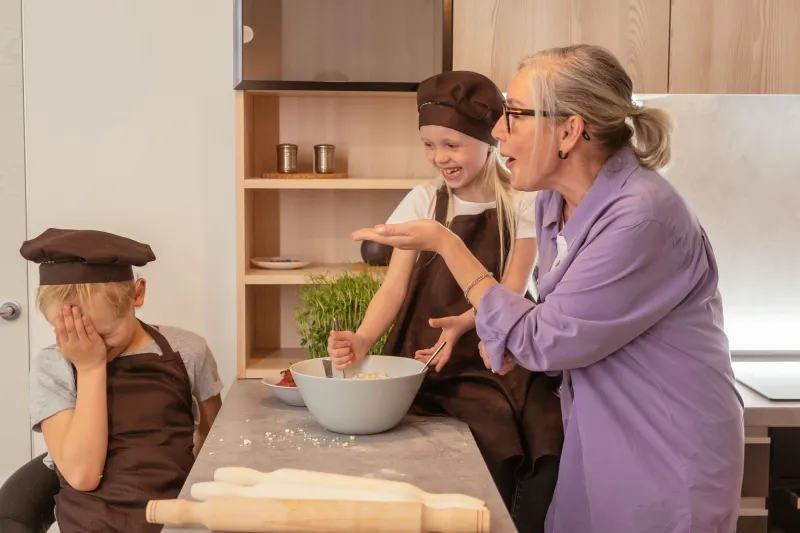
Families ask where to find Indian-language books for grandchildren who are learning to read in Hindi or Tamil or Punjabi. They ask about meal prep services that can accommodate the visiting parent's dietary restrictions — often stricter than the rest of the household. They look for activity kits that can occupy a grandmother and a four-year-old at the same time, something rooted in culture rather than whatever cartoon is currently popular.
They ask about mobility aids, about finding a nearby temple with services in a specific regional language, about where to buy the right incense without driving forty minutes.
Some Desi entrepreneurs have started paying attention. A handful of sellers on South Asian-focused platforms have quietly built product lines that make sense only if you understand this specific customer. Heritage language learning kits — not apps, but physical books and flashcards and activity sets that a grandparent can use with a grandchild without needing a smartphone. Meal prep boxes designed around regional Indian dietary patterns that the rest of the family doesn't necessarily follow. Prayer and puja supply bundles that arrive ready to set up, no assembly confusion required.
The Emotional Economics of the Visit
What separates the visiting grandparent market from almost any other consumer segment is how much emotional weight is attached to every purchase.
When a family buys a heritage language kit, they're not just buying a product. They're buying the possibility that their child will be able to have a real conversation with their grandparent — not just a translated one. When they order a meal prep service that accommodates Jain dietary restrictions, they're saying: we see you, we planned for you, you matter here.
Sellers who understand this aren't just selling convenience. They're selling connection across a very real cultural and generational gap.
That emotional dimension also drives some interesting purchasing behavior. Families will spend more than they normally would on items for a visiting grandparent. Not because they're careless with money, but because the visit is finite and precious. You're not going to cut corners on the prayer mat when Nani is here for eight weeks and this is her daily comfort.
The Opportunity Nobody Has Fully Grabbed
Here's what's surprising: despite the obvious demand, nobody has built a truly end-to-end service for the visiting grandparent experience. There are pieces — individual sellers offering relevant products, community groups sharing tips — but no one has assembled it into something coherent.
Imagine a curated shop specifically designed around the visiting parent or grandparent stay. A "Welcome Kit" that covers the first week: a local SIM setup guide, a puja corner starter bundle, a regional snack assortment, a heritage activity kit for the grandkids. Supplemented by a rotating selection of meal prep options, cultural activity suggestions by city, and practical items like appropriate walking shoes or easy-grip kitchen tools.
It sounds obvious when you lay it out. And yet.
The sellers who are closest to cracking this tend to be the ones who've lived it themselves — who remember what their own grandmother needed when she visited, what got overlooked, what would have made the stay easier and warmer. That lived knowledge is the product. The inventory is almost secondary.
A Market That Comes Back Every Year
One more thing worth noting: this isn't a one-time customer segment. The same family might have visiting parents every year or two. If a seller or service made that visit easier, more comfortable, more connected — they'll be back. And they'll tell every family in their WhatsApp group.
In a market built on community trust, that word-of-mouth is everything. The visiting grandparent economy is small, seasonal, and deeply personal. Which is exactly why it's worth building for.