Pani Puri on Wheels: The Desi Street Food Entrepreneurs Changing America's Food Truck Game
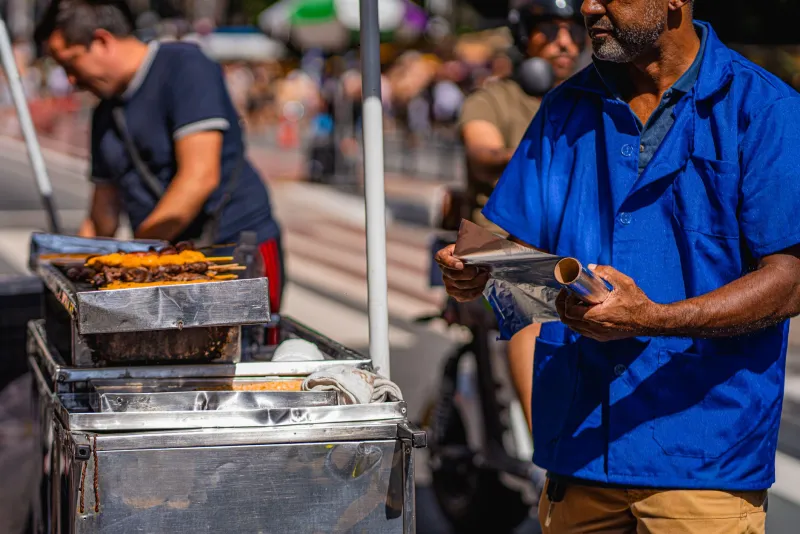
On a warm Saturday afternoon in the West Loop neighborhood of Chicago, a line of about thirty people snakes down the sidewalk toward a bright yellow food truck with the words "Chaat Wala" painted across the side in bold block letters. The menu is handwritten on a chalkboard: pani puri, sev puri, dahi bhalla, aloo tikki chaat, and a rotating special that last week was a Lucknowi-style kachori with imli chutney. The wait is forty-five minutes. Nobody's leaving.
Raj Kapoor, the 31-year-old owner and operator of Chaat Wala, didn't come from a restaurant background. He was in finance. But after years of watching his colleagues rave about mediocre "Indian fusion" options while he quietly knew how much better the food could be, he made a decision that his family thought was slightly unhinged. He bought a used truck, spent four months perfecting his recipes, and launched at a local street fair with $3,000 worth of ingredients and zero expectation of the line that formed within the first hour.
That was two years ago. Today, Chaat Wala operates three days a week, caters private events on weekends, and has a waitlist for corporate lunch bookings that stretches six weeks out.
The Moment American Appetites Changed
Raj's story isn't a one-off. Across the US — in Atlanta, Houston, New York, Los Angeles, Seattle, and smaller cities in between — South Asian street food entrepreneurs are building real businesses around the kinds of regional, hyper-specific desi flavors that restaurant menus rarely showcase.
For decades, the American understanding of South Asian food was shaped almost entirely by sit-down restaurants that catered to a broad palate: butter chicken, naan, biryani, a few samosas. Safe, familiar, and — if you grew up eating actual South Asian home cooking — kind of frustrating in their sameness.
The food truck and street food format has cracked that open. Lower overhead than a brick-and-mortar restaurant means entrepreneurs can take more risks with the menu. You can offer Kolkata-style kati rolls or Hyderabadi haleem or Goan prawn rechad without worrying that the average customer won't order it. And increasingly, that average customer is curious enough to try.
"Americans eat tacos from a truck. They eat banh mi from a cart. There's no reason they won't eat chaat," says Meena Iyer, who runs a Tamil street food pop-up in Austin called Theru Kadai — Tamil for "street shop." "The format is familiar even if the food isn't. And once people try it, they come back."
Regional Flavors, Not Generic "Indian Food"
What makes this wave of desi street food vendors different from earlier South Asian food businesses is the specificity. These entrepreneurs aren't trying to cover the whole subcontinent on one menu. They're going deep on one tradition — one city, one region, one culinary heritage — and doing it authentically.
Meena's menu is rooted in Tamil Nadu street food traditions: kothu parotta, sundal, murukku with chutneys, and a filter coffee that she makes with chicory-blend decoction the way her grandmother did in Chennai. She doesn't serve butter chicken. She's never served butter chicken. And that specificity is a big part of why her pop-up has developed a loyal following beyond the South Asian community.
"People are tired of the same five dishes being called 'Indian food,'" she says. "India alone has twenty-eight states and each one has its own food culture. Pakistan, Bangladesh, Sri Lanka — all of it is different. There's so much to explore."
In Houston, Imran Sheikh runs a truck called Dhaaba Street that focuses specifically on Lahori street food: brain masala, nihari, channay, and a karahi that takes three hours to cook. His customer base is roughly half South Asian diaspora and half adventurous non-desi eaters who found him through social media.
The Capital Problem — and How Vendors Are Solving It
Starting a food business in the US is expensive under any circumstances. For first-generation or second-generation immigrant entrepreneurs without family wealth or easy access to business credit, it can feel nearly impossible. Most of the vendors in this space are bootstrapping — using personal savings, contributions from family, and a lot of creative problem-solving to keep costs manageable.
One of the biggest ongoing challenges is ingredient sourcing. Authentic South Asian street food requires specific ingredients that you can't just pick up at a standard restaurant supply company. Imran spent months tracking down a reliable source for the specific cut of beef used in nihari before finding a halal butcher who could supply him consistently. Meena imports her coffee blend through a specialty vendor because the supermarket versions don't produce the right flavor profile.
This is where online marketplaces have become genuinely useful. Platforms like Apna Market give small food business operators access to specialty and hard-to-find South Asian ingredients without requiring them to have an established wholesale account or a contact at a specific import company. For vendors who are just starting out, being able to order authentic masalas, specialty flours, specific chutneys, and regional ingredients online — and have them delivered — removes a significant logistical barrier.
"In the beginning, I was driving two hours to a specific grocery in a different city to get the tamarind concentrate I needed," says Raj. "Finding a supplier online who ships it directly saved me hours every week. That's time I can spend on the actual food."
Building Community, Not Just Customers
Beyond the food itself, many of these vendors are consciously positioning themselves as community anchors — especially in cities where South Asian populations are spread out and don't always have a central gathering space.
For a lot of desis living in the US, seeing a chaat cart or a Bangladeshi street food pop-up at a local market isn't just a lunch option. It's a reminder that their food culture has a place here, that it's visible and valued. Vendors talk about older South Asian customers who tear up a little at the taste of something they haven't eaten since childhood, or parents who bring their American-born kids specifically because they want them to try the real thing.
"A woman came to my truck last month and told me the pani puri tasted exactly like the one she used to get outside her school in Mumbai," says Raj. "She stood there for a minute and didn't say anything. That's not just a sale. That's something else entirely."
What's Next for Desi Street Food in America
The trajectory is upward. Food media has taken notice — several desi street food vendors have been featured in major city food publications and on social platforms with significant followings. Mainstream food festivals are increasingly inviting South Asian vendors, and the audiences showing up are diverse.
For entrepreneurs considering the jump, the combination of a genuinely underserved market, a growing non-desi appetite for global flavors, and improved access to authentic ingredients through online platforms like Apna Market makes this an unusually good moment to start.
The food is ready. The customers are showing up. The only question is who's going to be at the window when the line forms.