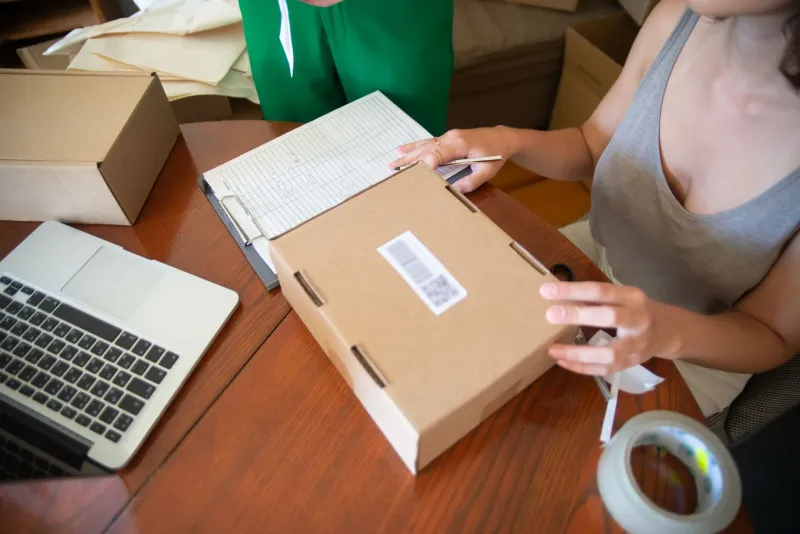
Two Days, Not Two Weeks: How Desi Sellers Finally Cracked the Shipping Problem

Anybody who's ever ordered mustard oil or a set of salwar kameez online knows the drill. You place the order, get a confirmation email, and then... nothing. Maybe a tracking number shows up three days later. Maybe your package is coming from a warehouse in New Jersey. Maybe it's coming from a cousin's garage in Fremont. You genuinely have no idea when it's going to arrive, and by the time it does, you've already made a second trip to the Indian grocery store anyway.
That was the reality of online Desi shopping for a long time. But something has shifted—quietly, methodically, and pretty dramatically—over the last few years. South Asian sellers operating on platforms like Apna Market are now delivering turmeric, textiles, and frozen parathas to American doorsteps in two to three days. Not two to three weeks. And the way they got there is a genuinely interesting story.
The Old Problem Nobody Talked About Enough
The early days of online Desi commerce had a fulfillment problem that was almost too obvious to state out loud: most sellers were importing goods on a per-order or small-batch basis, which meant every purchase triggered a mini supply chain adventure. Something ordered on a Tuesday might sit in a customs queue until Thursday, get sorted over the weekend, and arrive the following week—if you were lucky.
For perishables and spices, that timeline wasn't just inconvenient. It was a dealbreaker. Nobody wants to receive a bag of fresh curry leaves that's been in transit for eleven days. And for clothing or festival goods, slow shipping meant missing the actual occasion you were shopping for in the first place.
Sellers knew this. Customers definitely knew this. But the tools and infrastructure to fix it weren't really accessible to small independent vendors.
How the Logistics Playbook Got Rewritten
The shift started with a few sellers who decided to stop treating inventory as something you replenish after you run out, and start treating it as a strategic asset you position in advance.
Take Priya Nair, who sells specialty South Indian pantry staples out of her business based in the Dallas area. A few years ago, she was shipping orders from her own home storage—which meant every order was a personal logistics project. Today, she splits her inventory across two third-party fulfillment centers, one on the East Coast and one in California, which covers the majority of her customer base geographically.
"The math was simple once I sat down and looked at it," she says. "Most of my customers are in six states. If I have product sitting near them already, I'm not shipping across the country every single time."
That kind of distributed warehousing used to be reserved for bigger operations with serious capital. But the rise of third-party logistics providers—companies that rent warehouse space and handle pick-pack-ship on behalf of small sellers—has made it accessible to vendors moving a few hundred units a month, not a few thousand.
The Specialty Food Challenge
Not every Desi product fits neatly into a standard fulfillment model, and that's where things get interesting. Specialty foods—particularly refrigerated or frozen South Asian items—require cold chain logistics, which is a whole different level of complexity.
Vendors selling frozen samosas, fresh paneer, or marinated meats have had to get creative. Some have partnered with regional food distributors who already have cold storage infrastructure. Others have built direct relationships with restaurant supply companies that operate temperature-controlled delivery networks.
Amit Desai, who runs a small operation selling Gujarati snacks and frozen foods in the Chicago metro area, spent almost a year figuring out his cold chain situation before he felt comfortable scaling up online sales. "The product is great. That was never the question. The question was always: how do I get it to someone in Ohio without it being a disaster?"
His answer involved partnering with a regional food logistics company that already served Indian restaurants in the Midwest—essentially piggybackng on infrastructure that existed for a completely different customer base. "They already had the routes. I just needed to get my product onto those trucks."
Speed as a Trust Signal
Here's something that doesn't get discussed enough in the ethnic e-commerce conversation: fast shipping isn't just a convenience feature. For a lot of Desi shoppers, it's a trust signal.
For years, buying South Asian products online carried a certain amount of uncertainty. Would it actually show up? Would it be fresh? Would the packaging survive transit? Slow shipping times amplified all of that anxiety, because the longer something is in transit, the more opportunities there are for something to go wrong.
When a seller can get a package to your door in two days, it changes the psychological equation. It signals that this person has their operation together. That they're not running a side hustle out of their spare bedroom. That they're a real business.
"Customers started trusting me more once my shipping got faster," Priya says. "My return rate went down. My repeat orders went up. Those two things are connected."
Data from sellers on platforms like Apna Market backs this up. Vendors who've invested in faster fulfillment consistently report higher customer retention and better reviews—even when the product itself hasn't changed at all.
The Textile and Home Goods Side of the Story
Groceries get most of the attention in these conversations, but the logistics revolution is just as meaningful for sellers of Desi textiles, home décor, and festival supplies.
The traditional model for selling ethnic clothing and home goods in the US involved either importing in large batches (which required capital and storage space) or drop-shipping from overseas suppliers (which meant long waits and unpredictable quality control). Neither option was great for the customer.
A growing number of sellers have moved toward a hybrid model: they maintain a core inventory of their most popular items domestically, while reserving special-order or custom pieces for the longer-lead import process. This way, someone shopping for a basic kurta or a set of brass diyas gets fast delivery, while someone ordering a custom embroidered lehenga understands upfront that it's going to take longer.
Setting those expectations clearly—and then meeting them—has turned out to be a competitive advantage in itself.
What This Means for Desi Shoppers
If you've been burned by slow shipping before and kind of given up on ordering Desi goods online, it might be worth giving it another shot. The infrastructure behind these businesses looks genuinely different than it did even three years ago.
Sellers on Apna Market are increasingly able to offer delivery windows that compete with mainstream e-commerce platforms—which matters when you're trying to get mithai delivered before Diwali, or restock your masala drawer before the weekend cooking session.
The logistics problem that plagued early online Desi commerce wasn't unsolvable. It just took a generation of determined sellers willing to treat shipping as seriously as they treat the product itself. And honestly? It's about time.