What You See Is Not What You Get: The Food Photography Gap Hurting Desi Online Sellers
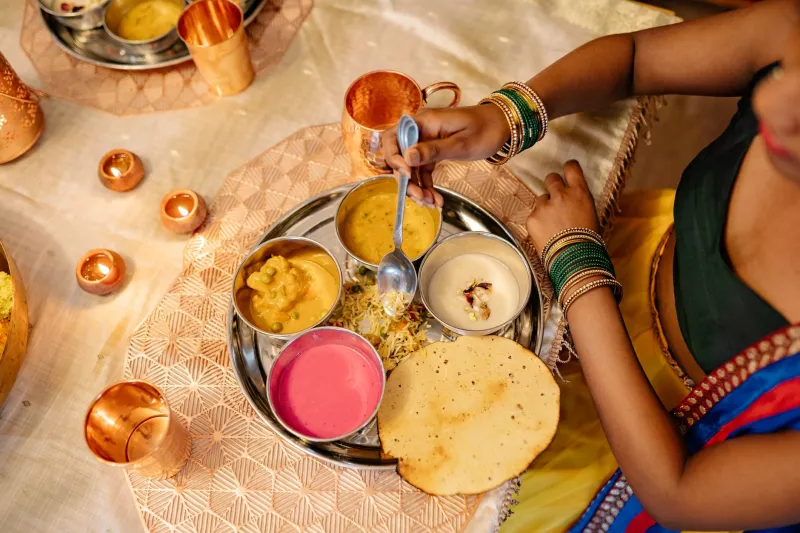
Scroll through any Desi food seller's Instagram page and you'll find it: golden-hued dal steaming in a copper karahi, hand-rolled papads fanned out like a magazine spread, jars of achaar catching the afternoon light just right. It looks incredible. It looks like something your naani would make if she also happened to own a ring light and a DSLR.
Then the package arrives. The dal is sealed in a zipper pouch with a slightly crooked label. The achaar jar is fine, but it's wrapped in bubble wrap and stuffed into a brown box that's seen better days. Nothing is wrong, exactly — but nothing quite matches the dream you bought into either.
This is the Instagram vs. reality problem, and it's quietly causing headaches for Desi food sellers across the US.
The Camera Eats First
Food photography has always been a little dishonest. Restaurants have been using tricks — toothpicks to prop up burger buns, motor oil standing in for syrup — since before social media existed. But the pressure has intensified dramatically for small, independent sellers who are now competing for attention on the same feeds as major food brands with professional marketing budgets.
For a lot of Desi entrepreneurs, the photography investment came before everything else. Priya Anand, who runs a small Mumbai-style snack business out of her home kitchen in New Jersey, says she spent nearly $400 on a photography course before she even finalized her packaging. "I knew the food was good," she says. "But I also knew nobody would click on a photo of murukku in a plastic bag sitting on my kitchen counter."
She's not wrong. In the attention economy, the photo is the pitch. And for Desi food products — which are often unfamiliar to non-South Asian buyers and need a little extra visual convincing — a well-styled image can mean the difference between a sale and a scroll-past.
The problem is that great photography raises expectations. Sky-high ones.
When Reality Hits the Doorstep
Online reviews for Desi food products are full of a particular kind of complaint. Not that the food tasted bad, but that it looked different than expected. Cookies that appeared thick and golden in photos arrived thin and pale. A spice blend that looked vibrant red in the listing showed up looking more brick-brown in person. Packaging that seemed sleek and premium online turned out to be a basic poly bag with a printed sticker.
Some of this is just the nature of digital photography — screens display color differently, lighting changes everything, and a macro lens can make a two-inch piece of chakli look like it belongs in a fine dining restaurant. But some of it is also a gap in seller strategy. Many small Desi food businesses are investing heavily in top-of-funnel imagery without thinking through what happens when the product actually lands in someone's hands.
"I got a DM once from a customer who said she felt 'deceived,'" recalls Farrukh Mirza, who sells Pakistani mithai through his small online shop based in Texas. "She bought my barfi because of a photo, and when it arrived, the color was slightly different because I'd changed ghee suppliers. The taste was the same, maybe even better. But she'd already made up her mind."
This is the emotional math of online food shopping: the photo creates a promise, and the product has to deliver on it. When it doesn't, trust breaks — even if the food itself is perfectly good.
The Packaging Problem
For many Desi sellers, packaging is where the gap becomes most obvious. Professional food photography can disguise a lot of things, but the moment a customer opens a box and finds their $18 jar of mango pickle wrapped in newspaper, the illusion collapses.
Custom packaging is expensive, especially for small-batch producers. A seller moving 200 units a month simply cannot afford the minimums that premium packaging suppliers require. So they improvise — and the results are inconsistent.
Some sellers have gotten creative. Deepa Krishnan, who makes small-batch chutneys in the Bay Area, started including a handwritten card with each order explaining the product's origin and suggesting serving pairings. "It doesn't fix the packaging," she admits, "but it reframes the experience. People feel like they're getting something handmade and personal rather than something that failed to be a fancy product."
That reframe — from polished to artisanal — is one of the smarter pivots available to small Desi food sellers. Leaning into the handmade story rather than competing with commercial aesthetics can actually turn a limitation into a selling point.
What Sellers Are Learning
The more experienced sellers in the Desi food space are starting to close the gap in a few different ways.
Honest secondary photos. Leading with a gorgeous styled shot but including a realistic "this is what arrives" photo further down in the listing. It manages expectations without sacrificing the initial wow factor.
Packaging investment in stages. Prioritizing the unboxing experience even when the outer packaging is basic. Tissue paper, a simple branded sticker, a thank-you note — these cost almost nothing but change how the product feels when it arrives.
Video content. Short videos showing the actual product — being opened, being scooped, being cooked — build trust in a way that still photography can't. A 15-second Reel of someone opening a jar of achaar and smelling it is more honest and, often, more persuasive than any styled photo.
Setting expectations in the copy. Simply describing the product honestly — "rustic, home-style packaging" or "traditional appearance, not commercially processed" — can neutralize disappointment before it happens.
The Bigger Picture
None of this means Desi food sellers should stop investing in beautiful photography. Visual appeal is real, and it drives real sales. But the most sustainable businesses in this space are the ones building trust across the entire customer journey — from the first scroll all the way to the last bite.
Because ultimately, what Desi food buyers are really looking for isn't a perfect photo. They're looking for the taste of something familiar, something that reminds them of home. The packaging is just the door. What's behind it is what keeps them coming back.
And no amount of ring-light magic can substitute for that.