One Size Fits None: How Desi Online Sellers Are Finally Cracking the Clothing Fit Code
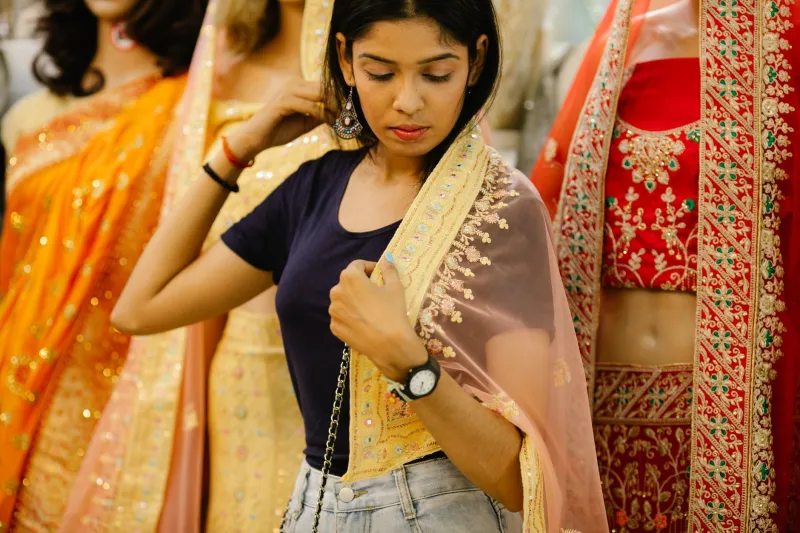
There's a ritual most desi women in America know by heart. You walk into a store, grab something in your usual size, head to the fitting room, and then spend the next ten minutes negotiating with a pair of pants that fits your waist but not your hips, or a kurta that pulls across the shoulders while bagging everywhere else. You leave empty-handed. Again.
This is not a personal failing. It's a structural one—and it's been ignored by mainstream American retail for a very long time.
The Body Behind the Problem
American clothing sizes were built around a particular body template. That template, developed decades ago from a narrow dataset, skews toward certain proportions that simply don't reflect the diversity of people actually buying clothes in this country. For South Asian shoppers specifically, the mismatch tends to be consistent and predictable: fuller hips relative to waist, shorter torsos, broader shoulders on men without the corresponding height, and petite frames that don't map neatly onto "XS" or "00."
None of this is news to anyone who's grown up navigating American department stores while coming from a desi household. What is news is that a growing segment of online desi retailers has decided to stop pretending the problem doesn't exist—and started building solutions from the ground up.
What Mainstream Retail Gets Wrong
Large American retailers have made gestures toward inclusivity over the past few years. Extended size ranges, "curve" sections, petite lines—these exist, and they matter. But they still tend to address size range without addressing size shape. A size 14 designed for the average American body and a size 14 designed with South Asian proportions in mind are not the same garment, even if the tag reads identically.
The issue compounds when you're shopping for ethnic wear. A salwar kameez or lehenga bought from a generic American retailer that happens to carry "ethnic" styles often fits awkwardly because the pattern itself was designed for a different set of measurements. The dupatta is too short, the choli too long, the waist placement off by two inches. You end up with something that looks vaguely right on a hanger and quietly wrong on an actual body.
What Desi Sellers Are Doing Differently
This is where smaller, community-rooted online sellers are quietly running circles around the big players.
Many desi-owned clothing shops—the kind you'll find on platforms like Apna Market or through direct Instagram storefronts—have started doing something radical: asking their customers what actually fits. Not through a generic survey buried in a post-purchase email, but through real conversations. DMs, WhatsApp threads, comment sections, community Facebook groups. Sellers are collecting fit feedback the same way your aunty collects gossip—thoroughly, consistently, and with genuine interest in getting the details right.
The result is sizing infrastructure that actually reflects desi bodies. Some sellers now offer measurement guides that go well beyond the standard bust-waist-hip trio. They'll ask for shoulder width, torso length, upper arm circumference, even the distance from shoulder to natural waist—measurements that make a real difference when you're talking about fitted blouses or structured sherwanis.
Others have gone further and introduced semi-custom or made-to-measure options at accessible price points. Instead of choosing between a small and a medium and hoping for the best, customers submit their measurements directly and receive a garment cut to their actual dimensions. It's not haute couture pricing—it's just a smarter way of doing business when your customer base has been consistently underserved by ready-to-wear.
The Fit Guide Revolution
Another tool gaining traction: the detailed, community-specific fit guide. Not the boilerplate "if you're between sizes, size up" advice that tells you nothing—but actual guidance written by sellers who know their product and know their customer.
Think things like: "This kurta runs narrow in the upper arm; if you carry more width there, we suggest going one size up and taking in the waist." Or: "Our lehenga skirts are designed for a lower hip measurement of 40–44 inches; if you're fuller through the thigh, here's how to adjust your order." Specific, honest, useful.
Some sellers pair these guides with real photos—not just model shots, but customer photos across different body types, submitted voluntarily and shared with permission. It sounds simple because it is simple. And yet it's something most major retailers still haven't figured out how to do authentically.
The Men's Side of the Equation
The conversation tends to center on women's clothing, but South Asian men face their own version of this problem. Desi men are frequently shorter and broader through the chest and shoulders than American size charts anticipate, which means a suit jacket that fits the shoulders pulls across the back, or a dress shirt that works in the chest billows at the waist. Sherwanis bought from non-desi retailers often miss the mark on sleeve length or collar fit.
Desi menswear sellers online have started addressing this too—offering shorter inseam options as a standard rather than a special request, and providing chest-to-shoulder ratio guidance that acknowledges the actual range of South Asian male body types.
Why This Matters Beyond Convenience
This might sound like a niche retail problem, but it connects to something bigger. Clothes that fit well aren't a luxury—they affect how people feel in their own skin. When the only clothes that fit you come from a category labeled "plus" or require extensive tailoring just to be wearable, that sends a message. Desi shoppers have been absorbing that message for years.
The sellers who are getting this right aren't just offering a better product. They're offering recognition. A fit guide that accounts for your body type says, implicitly, we designed this with you in mind. That's not a small thing.
Finding What Actually Fits
If you're tired of the fitting room lottery, the most practical advice is to shop smaller and shop desi. Sellers on community-focused platforms tend to be more responsive, more willing to answer specific fit questions before you buy, and more likely to have actually thought about how their garments work on South Asian bodies—because they and their families wear them too.
Take your measurements seriously. Invest fifteen minutes and a soft measuring tape. Most desi sellers who offer custom or semi-custom options will walk you through the process if you ask. And when you find a seller whose sizing works for you, tell people. Leave a review. Send a message. That feedback loop is exactly what's making these small businesses better—and it's what's going to keep pushing the industry in the right direction.
American retail has had decades to figure this out and largely hasn't. Desi sellers are doing it now, one well-fitted kurta at a time.