Clicks, Community, and Cash: What Happens to 'Buying Desi' When the Shop Is 2,000 Miles Away
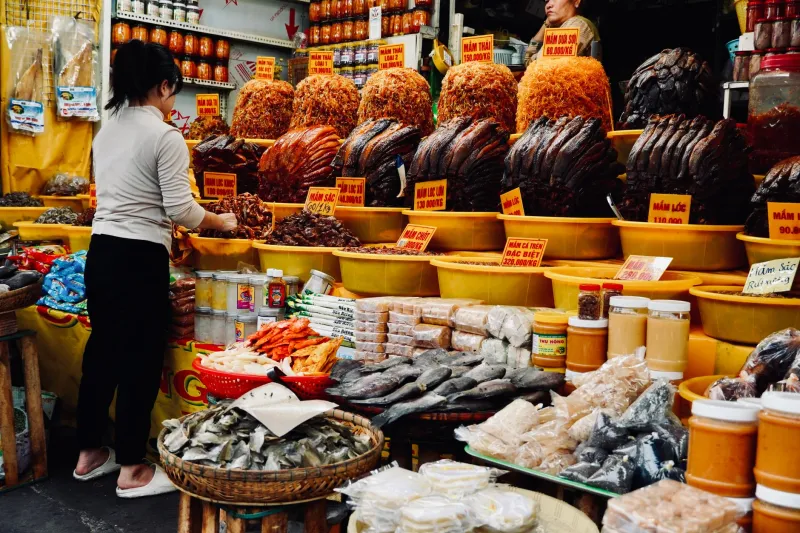
There's a small grocery store in Fremont, California that has been run by the same Gujarati family for over twenty years. The owner, Hemant Patel, knows most of his regulars by name. He knows who needs extra-hot pickle and who's been quietly switching to low-sodium everything since their last doctor's visit. That kind of relationship, he'll tell you, is what "community" used to mean in the Desi shopping world.
But Hemant will also tell you something else: his foot traffic has been shifting. Not disappearing — shifting. And the direction it's moving is unmistakably digital.
"I don't blame anyone," he says, leaning against the counter on a slow Tuesday afternoon. "People are busy. They're spread out. Their cousin is in Houston, their sister is in New Jersey. The community is everywhere now."
He's right. South Asian America has always been geographically scattered, but the pandemic accelerated something that was already quietly happening: Desi shoppers started going online — and not just to Amazon. They started finding each other.
The Old Definition of 'Keeping Money in the Community'
For the first generation of South Asian immigrants, community economics were almost entirely local. You bought your atta from the Indian grocery store two towns over. You ordered your wedding outfits from the auntie who ran a boutique out of her garage. You hired the Desi accountant your parents trusted. Money moved in tight circles, and those circles were drawn on actual maps.
The phrase "support your own" had a literal, physical meaning. You showed up. You paid in cash. You chatted. You came back.
That model worked beautifully when the community was concentrated — in Edison, New Jersey; in Artesia, California; in Devon Avenue in Chicago. But South Asian Americans today are just as likely to be living in Boise, Idaho or Raleigh, North Carolina as they are in those traditional enclaves. And for those folks, the old system was never really an option.
"I grew up in rural Ohio," says Priya Nair, a 34-year-old teacher who now lives in Columbus. "The nearest Indian grocery was 45 minutes away. I just... didn't have access. When I found sellers on platforms like Apna Market, it genuinely changed things for me. I could buy from a Desi-owned business for the first time without it being a whole production."
What the Digital Shift Actually Looks Like
Online Desi marketplaces have quietly become the connective tissue for a community that was always more geographically fragmented than it appeared. Sellers in New Jersey are shipping hand-ground spice blends to buyers in Montana. A small kurta boutique in Irving, Texas is getting orders from South Asian women in Vermont who've never set foot in a Little India.
For many sellers, this reach has been genuinely transformative. Sunita Mehta started selling homemade achaar and mukhwas through an online platform two years ago, mostly as a side project. Within six months, she had repeat customers in eight states.
"My buyers aren't just buying pickle," she says. "They're buying something that tastes like home. And I'm someone who actually understands what that means. That's the difference between me and a random food brand."
That emotional dimension — the shared cultural fluency between buyer and seller — is what Desi online commerce keeps coming back to. It's not just a transaction. There's a recognition built into it.
But Does a Click Count as Community?
Here's where it gets complicated. Some longtime shopkeepers worry that digital convenience is hollowing out something irreplaceable. When you shop online — even from a Desi-owned business — you lose the conversation, the impromptu advice about which dal to use, the sense of being somewhere that was built for you.
"I'm happy for people doing well online," says Hemant carefully. "But I also think something gets lost. My store is a gathering place. People run into each other here. That doesn't happen on a website."
It's a fair point. Physical Desi spaces have always served a social function that goes beyond commerce. They're informal community centers, news exchanges, places where new immigrants orient themselves and established families maintain ties. No app fully replicates the feeling of walking into a store where the aunties are debating which brand of basmati is worth the extra two dollars.
At the same time, digital advocates argue that online Desi commerce is creating new forms of community — ones that are less bounded by geography and more defined by shared values and identity.
"I follow the sellers I buy from on Instagram," says Priya. "I know their stories. I know why they started their business. That's a relationship too — it just looks different."
The Hybrid Future Nobody Planned For
What's emerging, perhaps unsurprisingly, is a hybrid model. Many brick-and-mortar Desi shops are building their own online presence, finding that digital reach doesn't have to cannibalize local sales — it can supplement them. Hemant himself recently started taking online orders for local delivery, a change he resisted for years before finally relenting.
"My son set it up," he admits with a small laugh. "I thought it would be complicated. It wasn't. Now I have customers I never would have had."
Meanwhile, online-first Desi sellers are increasingly investing in community in their own ways — sponsoring local cultural events, donating portions of sales to South Asian nonprofits, building loyal customer bases that feel more like a following than a transaction list.
The question of what it means to "support the community" is genuinely evolving. It used to mean geography. Now it might mean intentionality — making a conscious choice to seek out Desi-owned businesses, whether they're around the corner or across the country, instead of defaulting to a faceless retailer that happens to carry the same product.
The Apna Market Argument
Platforms built specifically around Desi commerce are making a case that the community itself is the product — not just the goods. When a buyer chooses a small South Asian seller over a generic option, they're participating in something larger than a single purchase. They're helping sustain someone's livelihood, validating a cultural niche, and signaling that the market for authentically Desi products is real and growing.
That argument resonates differently depending on who you ask. For younger Desi Americans who grew up without easy access to cultural goods, online marketplaces feel like a genuine lifeline. For longtime shopkeepers like Hemant, the picture is more nuanced — equal parts opportunity and anxiety.
But most people, when pressed, land somewhere in the middle. The community was never just a zip code. It was always about people who understood each other, who shared a language — sometimes literally, sometimes culturally — and who chose to invest in each other when they had options.
That part hasn't changed. The storefront just looks a little different now.