From the Kitchen Table to the Cart: How Young Desi Entrepreneurs Are Building Real Businesses on Their Own Terms
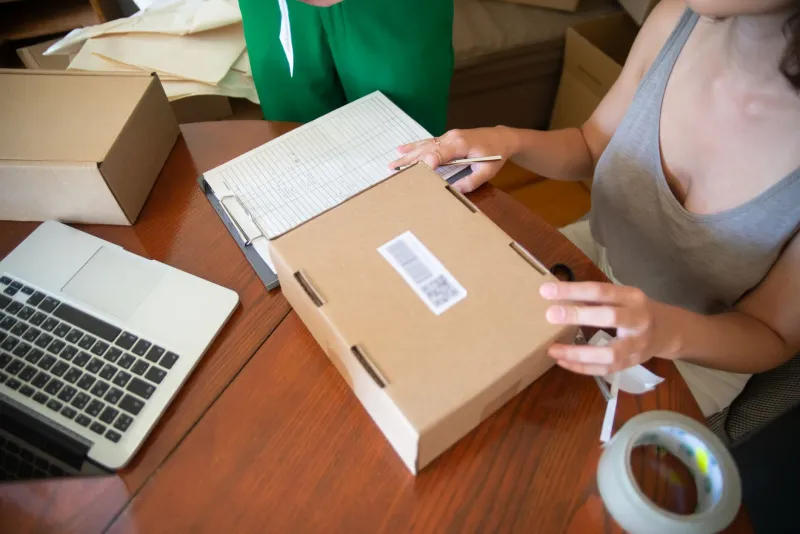
Priya Nair didn't have a business plan when she started selling her grandmother's achaar recipe out of her apartment in Fremont, California. What she had was a 200-year-old family formula, a secondhand label printer, and a group chat full of friends who kept asking her when she was going to "just sell this already."
Today, her small-batch pickle brand moves over 400 jars a month. She hasn't taken a single outside investment. And she built most of it through an online desi marketplace while working a full-time job in tech.
"I didn't think of myself as a business owner at first," Priya admits. "I just thought I was sharing something people couldn't find anywhere else. Then the orders started stacking up and I had to figure out the rest."
Stories like hers are becoming more common — and more consequential — than most people realize.
The New Playbook Doesn't Look Like the Old One
The traditional immigrant business narrative in America has a familiar shape: a family pools resources, opens a grocery store or a restaurant, works brutal hours for a decade, and maybe — maybe — passes something stable on to the next generation.
The second-generation version is being written differently.
Young South Asian entrepreneurs, many of them American-born or raised, are skipping the storefront entirely. They're launching food brands, clothing lines, artisan goods, and cultural products directly to buyers through platforms designed specifically for the desi community. They're building customer bases before they build inventory. They're learning SEO before they learn how to negotiate a commercial lease.
And critically, they're doing it without the financial infrastructure that traditional business formation usually requires.
"A lot of us don't qualify for small business loans right out of the gate," says Rahul Mehta, who sells handcrafted copper cookware through an online desi marketplace from his home base in suburban New Jersey. "No credit history for a business, no collateral, nothing. But I have a product people want and I have a platform that lets me reach them. That's enough to start."
Rahul's cookware line, which he sources from artisans in Rajasthan and sells with detailed provenance notes for each piece, now generates enough revenue that he's considering leaving his corporate finance job. He's not there yet. But the option exists — and two years ago it didn't.
Why the Desi Marketplace Model Changes the Math
Access to customers has historically been one of the biggest barriers for first-time sellers. You can have the best product in the world, but if no one knows you exist, you're just a person with inventory.
General platforms like Etsy or Amazon can work, but they come with their own challenges — brutal competition, algorithmic invisibility, and a customer base that may not immediately understand or value what you're selling. Listing a hand-ground spice blend or a traditionally embroidered dupatta alongside thousands of mass-produced alternatives makes it hard to stand out.
A platform built around the desi community changes that dynamic. Buyers arrive already primed. They're not stumbling across your turmeric latte mix by accident — they're actively looking for it. That intent gap matters enormously for conversion rates, and it matters even more for sellers who are still figuring out how to market themselves.
"My customers get it immediately," says Simran Kaur, who sells Punjabi-inspired candles and home fragrance products from Dallas. "I don't have to explain why a scent is inspired by marigolds and mustard fields. They know. That shared context is worth so much."
Simran started her candle business during the pandemic as a creative outlet. She had zero retail experience and a modest $300 starting budget. Now she's shipping wholesale orders to South Asian cultural centers and event planners across Texas and beyond.
Building Community Wealth, Not Just Personal Income
What's interesting about this wave of desi entrepreneurship isn't just its individual success stories — it's the economic ecosystem forming around it.
Many of these sellers source from artisans, small producers, or family suppliers back in South Asia. When they grow, those relationships grow. A pickle brand that scales from 50 jars to 5,000 jars a month is creating demand that flows back through the supply chain. A clothing seller who's moved from reselling to commissioning original designs is now someone's client, someone's employer, someone's reason to keep a craft alive.
At the same time, sellers are creating informal knowledge networks here in the US. Priya runs a small group for South Asian food entrepreneurs in the Bay Area. Rahul has mentored three other sellers who've reached out after seeing his growth. None of this is formalized, but it's real, and it compounds.
"We share what works," Priya says. "Shipping hacks, packaging suppliers, how to handle a customs delay. Nobody's competing with each other in a zero-sum way. There's more than enough demand."
The Bootstrapping Reality
None of this is without friction. Running a small product business from your apartment while holding down a day job is genuinely hard. There are supply chain headaches, customer service emails at midnight, and the particular stress of a product sitting in customs limbo while buyers wait.
There's also the ongoing challenge of being taken seriously. Some of these young sellers have encountered skepticism from family members who see their side hustle as a distraction rather than a real business. Others have navigated the awkwardness of being a South Asian seller in a market that sometimes still exoticizes the very products they're trying to normalize.
"I've had people act surprised that I have a professional operation," says Simran. "Like, yes, I have a website. Yes, I have a fulfillment process. Yes, this is a real business. That part gets old."
But the momentum is hard to argue with. And as more young desi entrepreneurs build visible, documented success through online platforms, the credibility gap closes a little more with each new storefront.
What Comes Next
The sellers we spoke with are thinking bigger. Priya wants to get her achaar into South Asian grocery stores across the Bay Area. Rahul is exploring whether he can work directly with artisan cooperatives in India to expand his product line. Simran is developing a subscription box concept for South Asian home goods.
All of them credit their marketplace presence as the foundation that made those bigger ambitions feel achievable. Not because the platform did the work for them — it didn't — but because it gave them a place to start that didn't require them to have everything figured out first.
That's the part of the new desi business playbook that's easy to underestimate. The old model required you to be fully ready before you launched. The new model lets you figure it out as you go, with real customers, real feedback, and real revenue from day one.
For a generation that grew up watching their parents work themselves to exhaustion to build something from nothing, there's something quietly powerful about finding a faster, lighter path to the same destination.
They're not abandoning the immigrant work ethic. They're just running it on better infrastructure.