Cottage Law, Cloud Kitchen, Cash Flow: Three Home Cooks Who Turned Family Recipes Into Paychecks
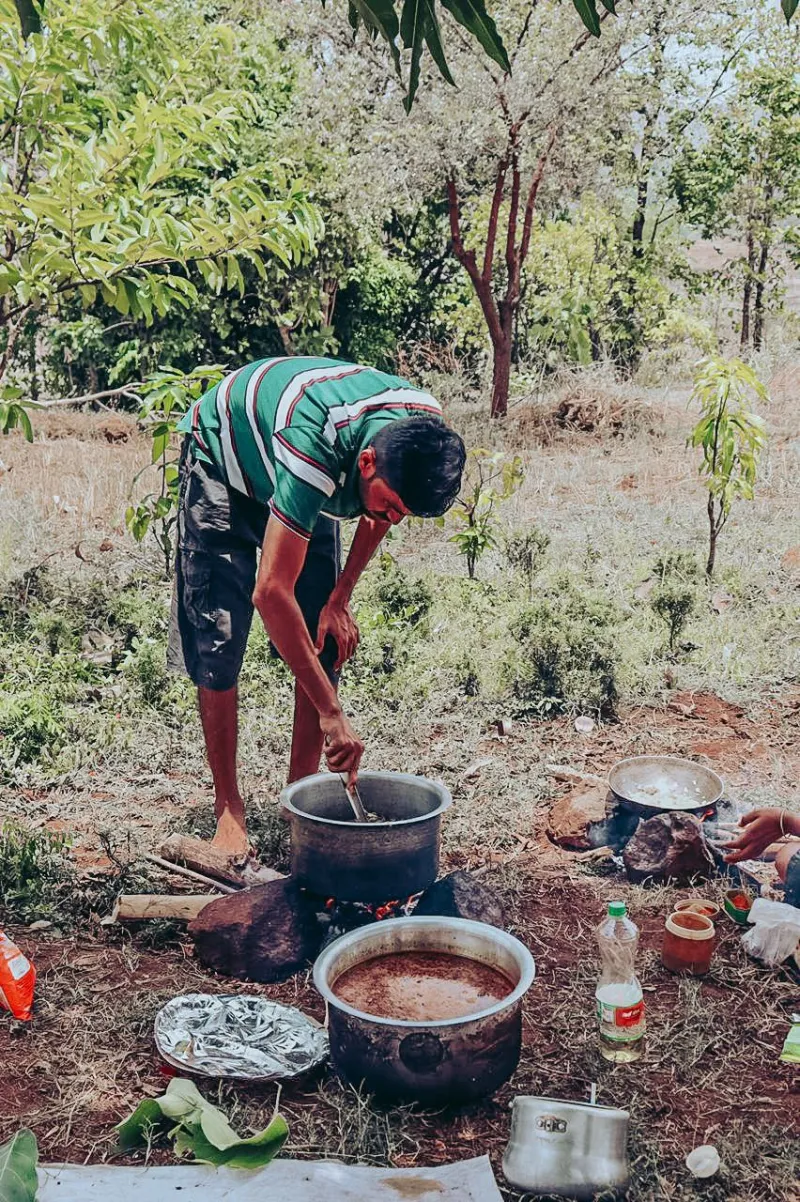
Photo: Wind Hashira, CC BY-SA 4.0, via Wikimedia Commons
The recipe was never supposed to be a business plan. It lived in a dented steel dabba, written in Urdu on the back of a bank deposit slip, guarded by a grandmother who measured spices by feel and refused — absolutely refused — to write down quantities.
Today, that recipe ships to customers in six states.
Across the US, a quiet wave of second-generation Desis is turning family cooking into licensed, legal, income-generating food businesses. Some operate out of home kitchens under state cottage food laws. Others rent hours in commercial cloud kitchens. A growing number sell through online marketplaces like Apna Market, reaching customers far beyond their own neighborhoods. We spoke with three of them about how it actually works — paperwork, heartbreak, and all.
Priya, 31 — The Biryani Operator, Austin, Texas
Priya's mother catered family functions in Delhi for decades but never charged what she was worth. When Priya moved to Austin and started cooking for homesick coworkers, the orders snowballed.
The turning point was discovering Texas's cottage food law, which permits selling certain low-risk foods — including, notably for her, items that don't require refrigeration — directly to consumers. Biryani itself was off the table under home-kitchen rules, so Priya pivoted: her mother's spice blends, raita kits, and shelf-stable chutneys became the product line, and weekend biryani pre-orders run through a rented commercial kitchen.
"The paperwork almost broke me," she admits. "Food handler certification, kitchen rental insurance, labeling rules. I'm an engineer — I thought cooking was the hard part. Cooking is the easy part."
Samir, 27 — The Mithai Modernizer, Edison, New Jersey
Samir's aunt has made kaju katli by hand for forty years in Edison, the heart of one of America's largest South Asian communities. Her mithai was legendary at every Diwali party — and completely invisible online.
Samir built the bridge. He worked with a co-packer licensed for confection production, standardized recipes into exact measurements (a process he describes as "negotiating with a very stubborn aunt for eight months"), and launched on marketplace platforms with vacuum-sealed packaging and clear ingredient labels meeting FDA requirements.
His edge? Storytelling. Every box ships with a card telling his aunt's story. "People aren't just buying sweets," he says. "They're buying the auntie. I just handle the logistics."
Rhea, 24 — The Achaar Disruptor, Fremont, California
Rhea's nani's mango pickle recipe survived the move from Ahmedabad to California, but turning it into a business meant confronting California's strict cottage food rules, among the tightest in the country. Acidified and low-pH foods face extra scrutiny, and pickle production at home wasn't happening.
Rhea's workaround: a shared-use commercial kitchen in Fremont where she rents hours at 2 a.m. — the only slot available. She completed a state-mandated food processing course, filed her labels for review, and started small: farmers markets first, then online orders.
Her first year netted about $18,000 in sales. Her second is on pace to triple that. "Every jar is my nani's recipe and my student-loan payment plan," she laughs.
What They All Learned
Three different states, three different products, three common threads:
- The regulation is the real product launch. Cottage food laws vary wildly by state — what's legal in Texas may be prohibited in California. Budget more time for compliance than cooking.
- Scaling a recipe means betraying it a little. "A fistful of methi" doesn't survive standardization. Every founder described the painful, necessary process of quantifying intuition.
- Marketplaces changed the math. A decade ago, these businesses died at the farmers market stage. Online platforms let a home cook in Fremont ship pickles to a Desi student in Boston — no storefront required.
The grandmother, for the record, has come around. Priya's mother now reviews every batch photo before it ships. Rhea's nani calls her "the boss" — a promotion nobody in the family saw coming.
Somewhere in your family, there's a recipe with a business hiding inside it. These three prove the harder question isn't whether the food is good enough. It's whether you're ready for the paperwork.