From a Farm in Kerala to Your Kitchen Cabinet: The Unglamorous Truth About Desi Spice Supply Chains
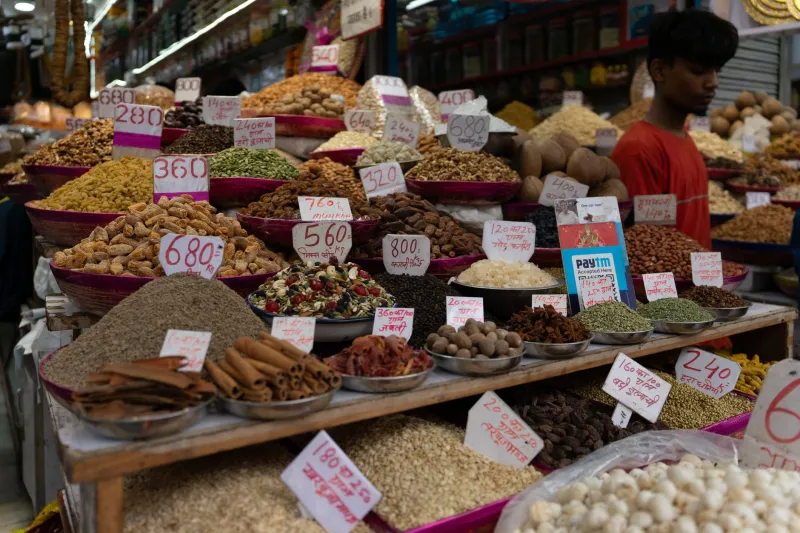
Somewhere between the turmeric fields of Andhra Pradesh and the aisle of your nearest Indian grocery store, a small miracle of logistics quietly happens every single day. Most of us never think about it. We just grab the jar, check the price, maybe grumble that it went up again, and move on.
But talk to the people who actually move these goods — the importers, the freight brokers, the small-batch sellers trying to source ethically — and a completely different picture emerges. One that's less "exotic supply chain" and more "barely-held-together relay race across multiple continents."
The Myth of the All-Powerful Spice Middleman
Ask any frustrated desi shopper why their favorite masala costs so much, and you'll often hear some version of the same theory: there's a cartel somewhere, a shadowy network of wholesalers jacking up prices while farmers get nothing and consumers get squeezed.
It's a satisfying story. It's also mostly wrong.
"People imagine there's one big player pulling strings," says Rajan Iyer, who has been importing spices to the US from South India for over fifteen years. "The reality is the opposite. It's completely fragmented. You've got thousands of small farmers, hundreds of regional aggregators, dozens of exporters, and then the US import side, which has its own whole set of players. Nobody controls it."
What actually drives price swings is far more mundane: weather, monsoon timing, diesel costs, port congestion, and the dollar-to-rupee exchange rate. When cardamom prices spiked dramatically a few years back, it wasn't a cartel — it was a poor harvest in Guatemala (which produces a significant chunk of the world's supply) combined with increased demand from Middle Eastern markets, all hitting at the same time.
How a Jar of Turmeric Actually Moves
Let's walk through it. A turmeric rhizome gets harvested in Erode, Tamil Nadu — one of the world's largest turmeric-producing regions. From there it goes to a local mandi, a wholesale agricultural market, where prices are set daily based on supply and quality grades. A regional aggregator buys it, processes it (drying, polishing, sometimes grinding), and sells it to an exporter.
The exporter handles the paperwork — phytosanitary certificates, quality testing, export documentation — and arranges ocean freight. A standard container crossing takes roughly three to four weeks to reach a US port. Then comes US Customs inspection, FDA checks for food imports, and if anything flags (contamination, labeling issues, paperwork errors), the whole shipment can be held or rejected.
"I had a container held for six weeks once because of a documentation error," says Priya Nair, who runs a small spice import operation out of New Jersey. "Six weeks. The carrying costs alone nearly wiped out my margin on that shipment."
Once cleared, the goods go to a warehouse or distributor, get broken into smaller lots, and eventually reach the retail sellers — whether that's a brick-and-mortar desi grocery or an online marketplace. By the time it reaches you, that turmeric has been touched by somewhere between eight and fifteen different businesses across two continents.
Why Prices Jump Around So Much
Here's what most shoppers don't realize: the spice sitting on a shelf today was priced months ago, based on conditions that no longer exist. Importers buy in bulk and hold inventory. By the time a price increase from a bad harvest works its way through the chain to your cart, it's often six months to a year after the actual event.
This lag creates a maddening disconnect. Consumers see a price jump and assume someone is gouging them. Sellers, meanwhile, are often absorbing losses from inventory they bought at higher prices during a previous spike.
Barkat Singh, who grows basmati in Punjab and sells through a US-based cooperative, puts it plainly: "The farmer is not getting rich. The importer is not getting rich. Everyone in between is working on margins that would make an American businessman laugh. We do it because it's our product, our culture, our community."
The Quality Problem Nobody Talks About
Beyond price, there's a quality inconsistency that plagues the desi spice market in the US. Because the supply chain is so fragmented, two bags of "premium cardamom" from different brands can be wildly different in aroma, freshness, and potency — even if they cost the same.
Part of this is adulteration, which is a real and documented problem in global spice markets. The FDA has flagged issues with lead chromate in turmeric, artificial coloring in paprika, and filler ingredients in blended masalas. Reputable importers test their products, but smaller operations sometimes skip that step.
"Buyers on our platform ask us about sourcing more than anything else," says one seller on Apna Market. "They want to know: where did this come from? Is it tested? Can I trust it?" That demand for transparency is reshaping how sellers present their products — more origin labeling, more batch testing, more storytelling about the actual farm.
What This Means for Online Desi Sellers
For small sellers operating in the desi marketplace space, the supply chain complexity is both a challenge and an opportunity. The challenge: you're competing with large importers who can absorb price swings you cannot. The opportunity: you can offer something they can't — a direct relationship with a specific region, a specific farm, a specific quality standard.
The sellers doing best right now are the ones who've invested in understanding their supply chain end to end. They know their exporter. They've visited the farm, or at least communicated directly with the grower. They can tell a customer exactly why their Malabar black pepper costs more than the generic stuff — and that customer will pay for it.
The spice trade has always been about trust. That was true when Arab merchants controlled the medieval routes, and it's still true today when a second-generation desi American is clicking "add to cart" at midnight, looking for something that tastes like home.
The supply chain isn't glamorous. But understanding it — even a little — changes how you think about that jar on your shelf.