Scroll, Steal, Sell: The Knockoff Economy Targeting Desi Creators
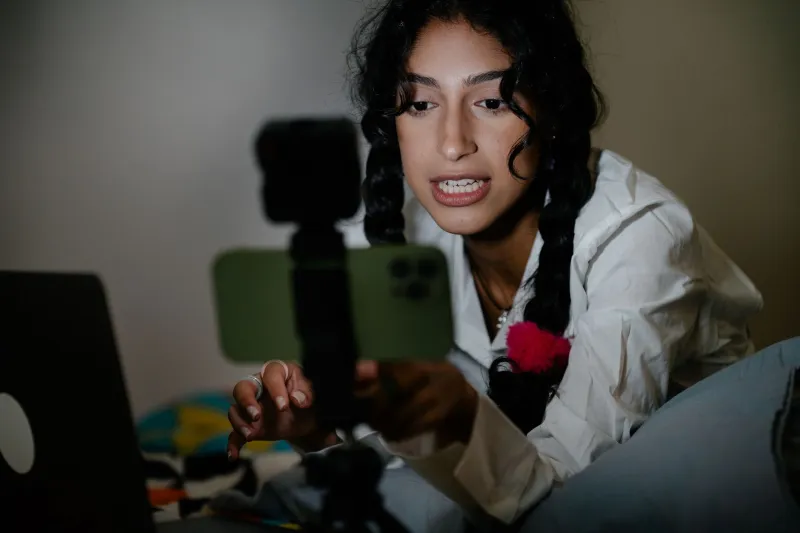
It started with a comment.
Nadia Hussain, a Pakistani-American creator based in Chicago, had spent the better part of a year developing a line of hand-embroidered kantha pouches—small fabric bags stitched with traditional Bengali patterns that she sold through her Instagram shop and on Apna Market. The designs were hers. The patterns were inspired by her grandmother's sari collection. The color combinations were something she'd worked out herself over dozens of failed prototypes.
Then one of her followers sent her a link. A fast-fashion brand with half a million Instagram followers was selling nearly identical pouches. Same stitch pattern, same color palette, same general vibe. The price? Seven dollars. Nadia's sold for thirty-five.
"I just sat there staring at my phone," she says. "I couldn't even be angry at first. I was just... stunned."
She's not alone. Across the Desi creator economy, a quiet crisis is unfolding—and it's getting worse.
How the Theft Actually Happens
The pipeline from "viral Desi product" to "knockoff on a big site" is faster and more systematic than most people realize.
Larger brands and overseas manufacturers routinely monitor trending content on TikTok and Instagram, specifically hunting for products that are gaining traction with niche audiences. When something goes viral in a specific community—South Asian, Black, Latinx—it gets flagged. Within weeks, samples are being manufactured. Within months, the knockoff is live.
The Desi market is particularly vulnerable because so many of its most compelling products are rooted in cultural knowledge that mainstream brands have historically ignored. When a Desi creator introduces something genuinely new to the American market—a specific regional spice blend, an embroidery style, a traditional garment adapted for modern wear—they're not just launching a product. They're educating the market. And once the market is educated, larger players swoop in.
"We do the hard work of making people care about something," says Arjun Kapoor, a second-generation Indian-American who sells custom block-printed kurtas out of Austin. "And then someone with a manufacturing contract in Bangladesh can undercut us in thirty days. It's demoralizing."
The Legal Reality Is Brutal
Here's the uncomfortable truth: for most small Desi sellers, legal protection is nearly out of reach.
Copyright law in the US doesn't automatically protect clothing designs or textile patterns. Trademarking a specific product takes time and money—often thousands of dollars in legal fees—and even a registered trademark doesn't stop overseas manufacturers who operate in jurisdictions where US law has limited reach.
Patents are theoretically available for genuinely novel product inventions, but the process is expensive, slow (often taking two to three years), and requires a level of documentation that many small sellers operating informally simply don't have.
"I looked into trademarking my spice blend name," says Meena Rajan, who runs a small Chennai-style curry paste business in New Jersey. "The lawyer quoted me $3,500 just to start. My whole marketing budget for the year was $2,000."
Platform-level reporting tools—the "report this listing" buttons on Instagram and Amazon—are largely ineffective against sophisticated copycats who know how to make their products look just different enough to avoid automatic removal.
The Ways Desi Creators Are Fighting Back
But here's the thing: the Desi creator community has never been short on resourcefulness. And the response to the knockoff crisis has been creative, sometimes hilarious, and occasionally genuinely effective.
Going loud on social media. When Nadia discovered the copycat pouch brand, she made a video about it. Calmly, clearly, and with receipts—screenshots, dates, side-by-side comparisons. The video got shared widely within the South Asian creator community. The brand eventually pulled the product, though they never publicly acknowledged the issue.
"I didn't have a lawyer," Nadia says. "I had a following. That's a different kind of leverage."
Watermarking everything. Creators are now routinely embedding their handles, logos, and sometimes subtle design signatures into product photos before posting. Some go further, deliberately introducing a small, hard-to-replicate detail into their designs—a specific bead placement, a color variation—that acts as a fingerprint.
Building community before launching. Savvy sellers are now using a "slow reveal" strategy, building audience investment in a product's story before it's available to buy. By the time a product launches, it has a documented origin narrative attached to it. Knockoffs can copy the object, but they can't copy the story.
Collective documentation. A growing number of Desi creators are using private group chats and community forums to track suspected copycats, share evidence, and coordinate public callouts. There's something almost deliciously organized about it—a WhatsApp group full of aunties holding major brands accountable.
What Platforms and Marketplaces Could Do
The responsibility doesn't fall entirely on individual creators. Platforms have a role to play too.
Smaller, community-focused marketplaces like Apna Market carry a built-in advantage here: sellers are known, vetted, and embedded in a community that notices when something looks off. That social accountability doesn't exist on platforms where anyone can list anything.
But even community platforms need clearer tools for documenting original designs, flagging suspected copies, and escalating disputes. The legal system may not be built for small sellers, but marketplace infrastructure can be.
The Emotional Tax Nobody Talks About
Beyond the financial damage, there's a quieter cost that's harder to quantify.
For many Desi creators, their products aren't just revenue streams. They're cultural expressions. A hand-embroidered pouch isn't just a bag—it's a connection to a grandmother's textile tradition. A regional spice blend isn't just a product—it's a family recipe that survived a migration. When those things get copied and commodified by a brand with no connection to the culture, it stings in a way that goes deeper than lost sales.
"It's not just my design they took," Nadia says quietly. "It's something that meant something to me. And they turned it into a $7 impulse buy."
That's the part that doesn't show up in a DMCA filing. But it's real. And the Desi creator community is increasingly unwilling to let it slide quietly.